


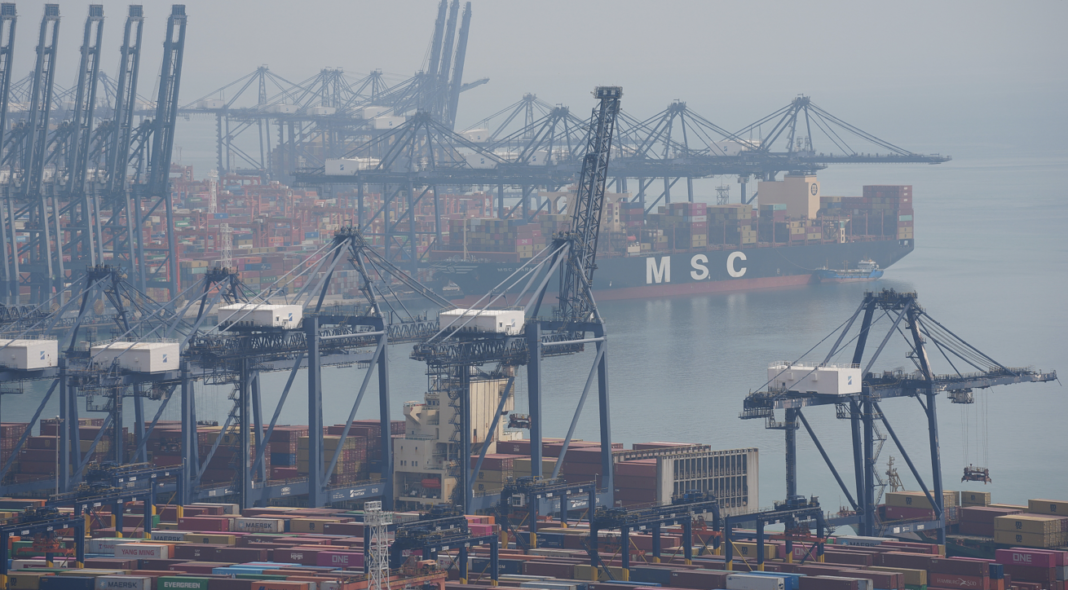
A view of the Yantian Port seen from the viewing platform, Shenzhen, Guangdong province, China, February 20, 2026. /VCG
As the 2026 National Two Sessions unfold, one theme has stood out among lawmakers, experts, and industry leaders: how China can further open its economy in a more systematic, predictable, and high-quality way. This approach, widely referred to as institutional opening-up, represents a strategic shift from traditional measures that mainly focused on the flow of goods and resources. Instead, China is now emphasizing the alignment of rules, regulations, and standards with international practices to create a more transparent and stable business environment.
During this year’s sessions, I spoke with several key figures, including Chinese Academy of Engineering member and NPC Deputy Peng Shou, NPC Deputy Kenneth Fok, and Song Zheng, President of the Hunan Branch of China Development Bank. Their insights revealed how China is putting institutional open-up into practice and what it means for global partners.
NPC Deputy Peng Shou emphasized that institutional reforms must be long-term and systemic rather than fragmented or case-specific. “A system is about lasting effectiveness. It’s not a short-term action,” he said. “It’s not about handling isolated cases, but about involving everyone—society as a whole.”
This vision is being realized through practical pilots across China. With 22 Free Trade Zones nationwide, and more than 110 innovative measures in places like Shanghai and Hainan, China has turned previously fragmented policies into coherent frameworks. A notable example is Hainan Free Trade Port’s customs closure, which simultaneously streamlines cross-border trade, strengthens digital infrastructure, and fosters high-tech industrial development.
Peng explained how leveraging processing technology and value-added measures can stimulate entire sectors, from high-tech manufacturing to innovation-driven services.
The model is also adaptable. “We may apply this negative list approach to other cities or development zones,” Peng noted. “And we can build digital foundations in major hubs like Beijing and Shanghai, using AI and digital technology as a base.”
Institutional opening-up isn’t limited to trade rules. Kenneth Fok highlighted the role of people-to-people exchanges. In 2025, China recorded nearly 700 million entries and exits, a 14.2% increase year-on-year, while visa-free agreements now exist with 29 countries. Fok emphasized Hong Kong’s potential to contribute to international cooperation, stressing the importance of working together to strengthen friendly exchanges.
NPC Deputy Song Zheng underscored the benefits for foreign investors. “This type of institutional open-up allows investors to see China’s unique advantages and provides stability in today’s uncertain global economy,” she said. “It’s something we’re doing by uniting people across the country and gathering everyone’s ideas.”
The significance of institutional opening-up goes beyond aligning with global standards. It is about creating a transparent, predictable, and inclusive environment that not only attracts international partners but also strengthens China’s own economic resilience. By embracing this new model, China is not only enhancing its position in the global market but also reshaping the very framework of its economic development for the future.
By Zhu Zhu, CGTN Reporter